The liquid deicer sprayed on Colorado roads, much of it magnesium chloride, does a good job keeping ice from bonding to the pavement. It’s also corrosive, and because it’s a liquid that stays damp and sticky, it gets into places road salt never reached on older cars. Steel brake lines, brake hardware, exhaust hangers, wheel studs, and electrical connectors underneath your car take the worst of it. The good news is that most of the damage is preventable with regular rinsing during the winter and a quick inspection once a year.
Here’s what to watch for, and why brake lines are the one I’d pay the most attention to.
Why the liquid deicer is different
Old-school road salt was mostly rock salt and sand. It did its share of damage, but a lot of it bounced off or washed away.
Liquid deicers work differently. They’re sprayed on before and during storms, they cling to the road and to your car, and they attract moisture, which means they stay damp long after the road looks dry. That damp film creeps into seams, around fittings, and inside connectors, and it keeps working on bare metal for as long as it sits there.
On top of that, our winters swing above and below freezing all season. A car that gets coated on a Tuesday storm and then sits in a warm garage is in the best possible conditions for corrosion. None of this means the state should stop using it. Safer roads matter more. It just means a car driven through a Colorado winter needs a little more attention underneath than one in a dry climate.
What it attacks first
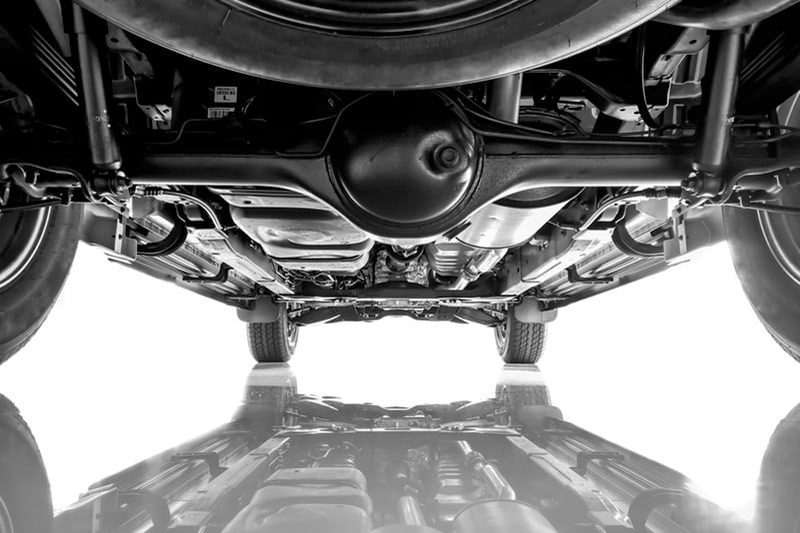
Brake lines are the big one. Most cars use steel lines to carry brake fluid from the master cylinder to each wheel. They run along the underside of the car, often right in the spray path from the front tires, and they’re thin. Once corrosion gets through the coating, it can eat through the wall of the line. When that happens, brake fluid leaks out, and a leak in a brake line means a soft pedal or, in the worst case, a pedal that goes to the floor.
Brake hardware comes next. Corrosion builds up on caliper brackets and slides, causing calipers to stick. A sticking caliper wears pads unevenly, overheats rotors, and can cause pulling and vibration. We covered that in why your steering wheel shakes when you brake.
Exhaust hangers, clamps, and heat shields rust out and start rattling, or let the exhaust sag.
Electrical connectors underneath the car, especially for wheel speed sensors, oxygen sensors, and trailer wiring, corrode and cause intermittent faults. A corroded wheel speed sensor connector is a common reason for an ABS or traction control light in the winter. Our post on how anti-lock brakes work explains why those sensors matter.
Wheel studs and lug nuts can corrode to the point that they seize or snap during a tire change, which is a fun discovery on the side of the road.
Warning signs to take seriously
Some signs mean get it checked soon.
A brake pedal that feels softer or lower than it used to, or slowly sinks when you hold it at a light. Any brake fluid warning light. Wet, oily spots on the inside of a tire or along the underside of the car. Those are the ones that point at a brake line or hose, and they’re not worth waiting on. If the pedal goes noticeably soft, park the car and call us.
Other signs are less urgent but worth mentioning at your next visit. A new rattle from underneath, an ABS or traction light that comes and goes in wet weather, uneven brake pad wear, or a car that pulls slightly when braking.
The habits that prevent most of it
You don’t need to do anything elaborate. A few habits make a real difference.
Rinse the underside during the winter. The best time is after a storm when temperatures are above freezing and the roads have dried. A car wash with an underbody spray works, or a garden hose aimed under the car and into the wheel wells once the weather allows. Every couple of weeks during active storm periods is a reasonable goal.
Give it a thorough underbody wash in the spring. After the last storm, get the whole season’s residue off before it sits all summer.
Have the underside looked at once a year. When your car is on a lift for an oil change or tire rotation, it takes a technician a minute to look at the brake lines, hoses, hardware, and exhaust hangers. Fall is ideal, before the season starts, and so is spring, to see what the winter did.
Don’t ignore small things. Surface rust on a brake line is normal. Scaling, flaking, or swelling under the coating is not, and replacing a line before it leaks is much easier and cheaper than replacing it after.
What brake line repair involves
When a brake line is corroded badly enough to replace, the right repair uses new line of the correct material, properly flared fittings, and secure mounting so it doesn’t rub or vibrate. On some cars a single section can be replaced. On others, especially when one line has rusted through and the rest look similar, replacing the full run makes more sense than patching one spot this winter and another next winter.
After any brake line repair, the system gets bled to remove air, and the pedal and brakes get tested before the car leaves. We’ll also check the other lines, the flexible hoses at each wheel, and the calipers while we’re there.
As always, we photograph what we find and send you the pictures, so you can see the condition of the lines yourself. It’s a lot easier to make a decision about brake lines when you can see them, because otherwise they’re a part of the car you’ll never look at.
Bring it in before the worst of the season
If your car has been through a few Colorado winters and nobody has looked underneath it lately, now is a good time. We’ll put it on the lift, check the brake lines and hardware, look at the exhaust and the connectors that tend to corrode, and tell you honestly what needs attention and what’s fine for now.
Our brake repair page explains how we handle brakes, and our exhaust repair and electrical repair pages cover the other parts that take a beating. If you’re getting the car ready for winter anyway, our post on winter tires versus all-season tires is worth a read too. Request an appointment or stop by the shop at C470 and Bowles.